
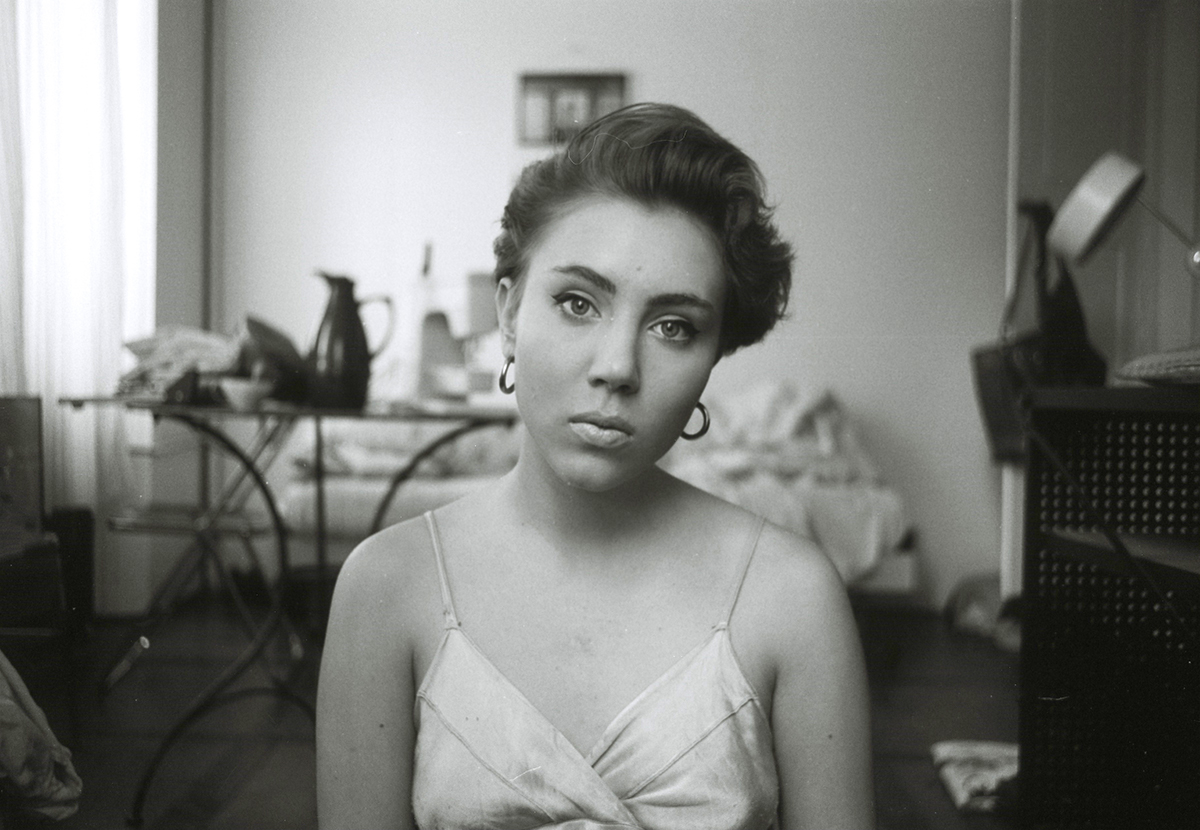
» At the beginning stands the search of a young woman for her own space in this world. The black-and-white photographs powerfully convey her critical and searching gaze—on herself as a young woman, on her personality, and on her first home, both inside and out. It becomes clear that from the very beginning of her artistic journey in the mid-1980s, Sonja Maria Schobinger has been a photographer. In the darkroom, she first explored the possibilities of analog photography through silver gelatin prints with curiosity and experimentation. Later in her artistic search, she delved into the world of digital photography, only to return again and again to traditional artistic techniques, such as drawing—though practiced using the tools of a computer screen. The camera is a significant technical instrument to tentatively explore the world and the self. Yet it is not the technical aspect of photography that interests her (today). Her quest is for the substance beyond matter; she illuminates fleeting moments with great nuance and captures their transience in her images. Sonja Maria Schobinger’s long-term (research) projects have evolved over decades into thematic groups: early self-portraits in Coming of Age, Anthemis Nobilis, Still Lifes, Flowers, and Trees. In the long-term project Anthemis Nobilis, we see a female body—the artist’s own—surrounded and protected by plants.The female body is more sensed than seen—its contours wrapped in various plants: mistletoe, blackberries, strawberries, violets, and delicate branches from different trees. The artist searches in her compositions for the essence of each plant and its harmonious counterpart. The result is a series of fragile image-layerings that challenge the viewer’s eye without distorting perspective. These layers generate a certain visual tension. At the same time, by combining historical botanical photography with analog images from Coming of Ageusing digital techniques, the work expresses different layers of time: past and present, the capturing of a moment and the documentation of change over time. The plants, with their unique and specific qualities, provide a protective covering for the vulnerable body—offering both protection and healing. At the same time, they embed the human organism into the forces of nature and the cycle of life. In the moment a petal is backlit, or the shimmering canopy of a tree becomes translucent, light—the immaterial—becomes visible. And here we again encounter the photographer behind the lens, who sensitively and precisely illuminates the magic of the moment and explores the mysteries of being. » Text excerpt written by Dr. Astrid Bextermöller, art historian, Basel
alphabet : s
Yuya Suzuki
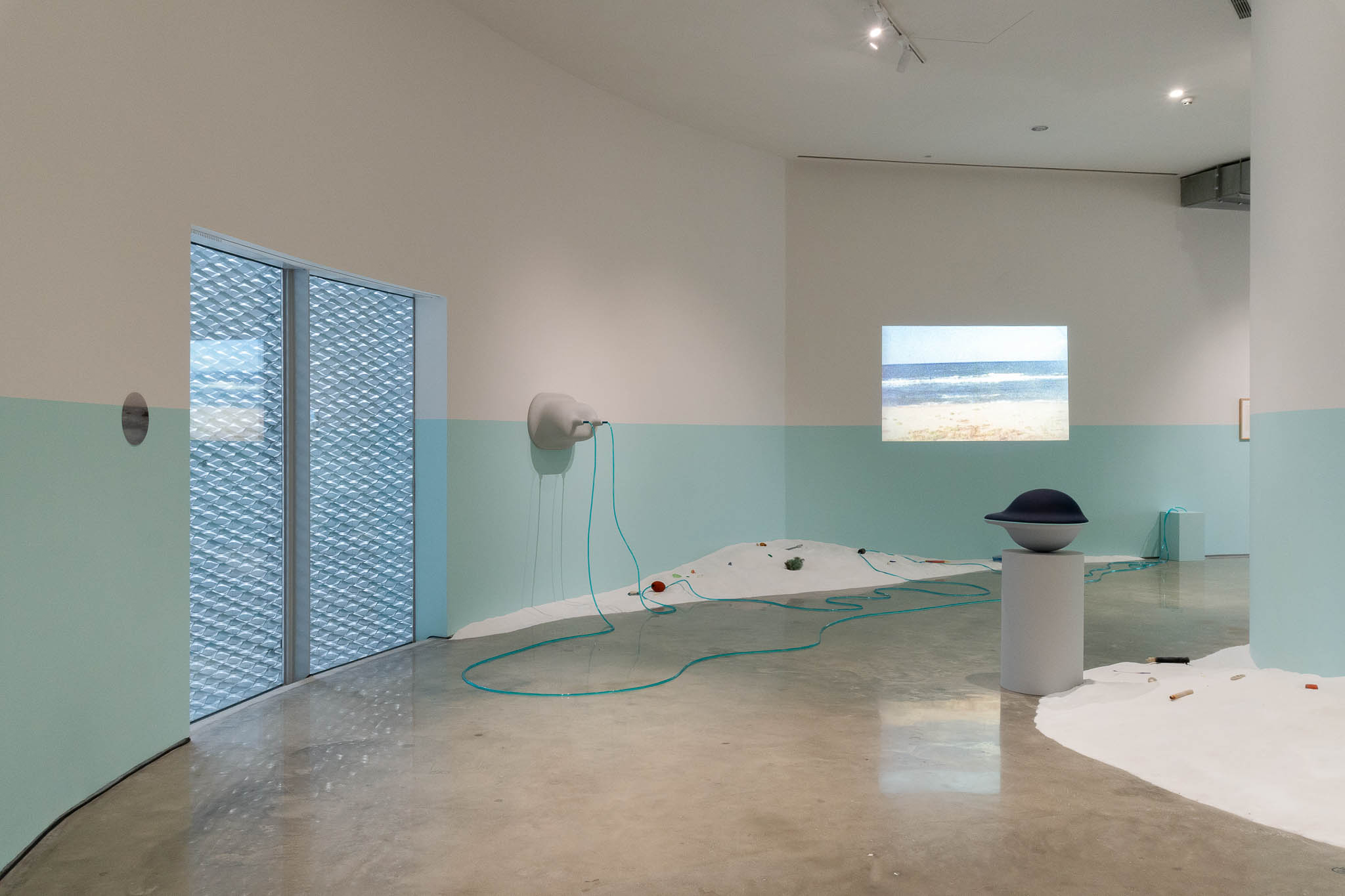
Focusing on the intermediate zones within urban environments—those between the private and the public, and between the artificial and the natural—Yuya Suzuki extracts symbolic images through the process of drawing, based on the forms of “residues” generated by the interactions among urban metabolism, natural forces, and human consumption. Using these as the foundation of his own visual language, he employs various media—including sculpture, video, painting, and kinetic objects—to reconstruct the real world through mixed-media installations.
Nicole Schmölzer
Nicole Schmölzer
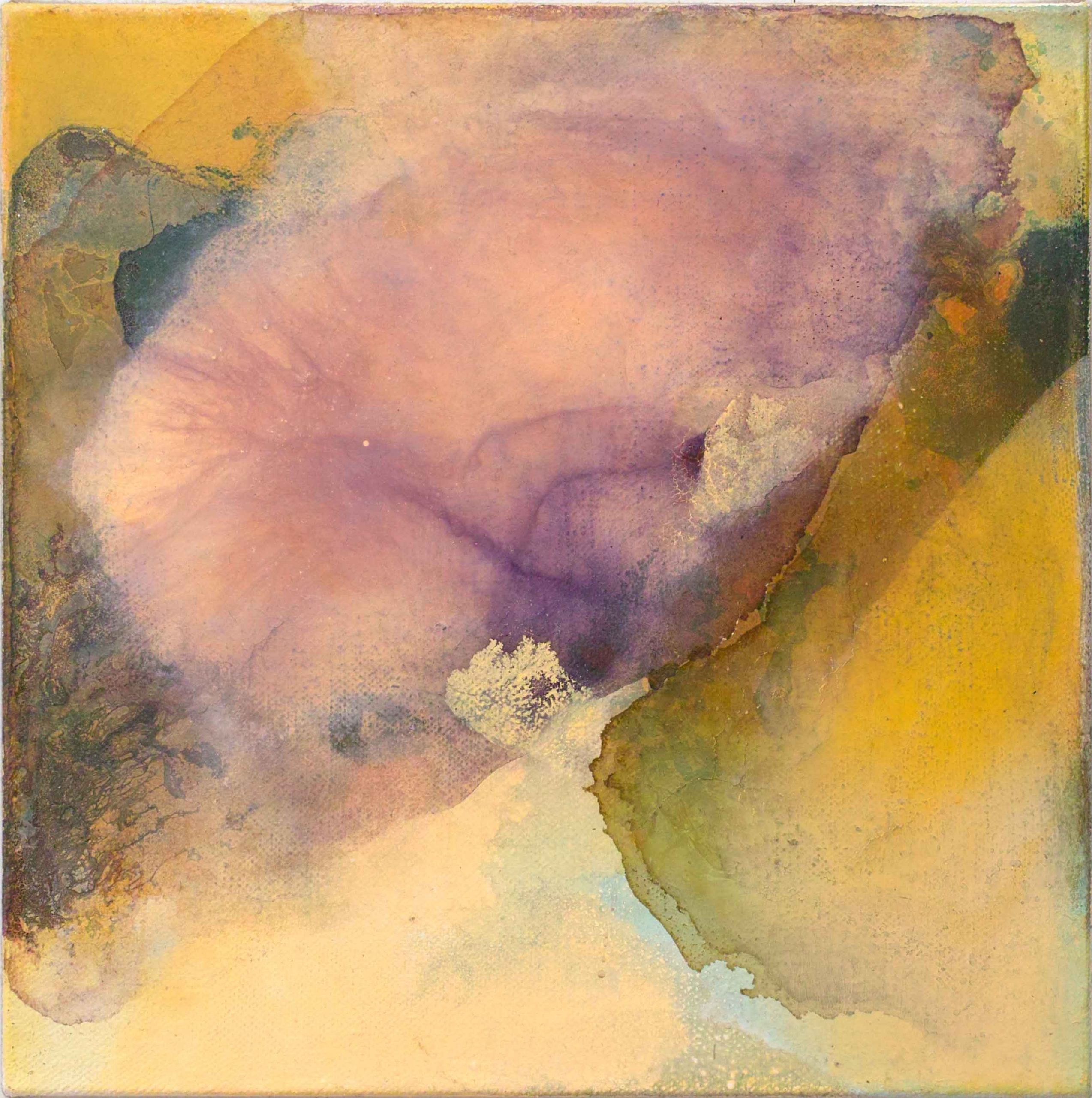
Meine Arbeitsweise mit Tusche und Ölfarbe auf Leinwand drückt sich durch einen organisch-natürlichen Prozess aus. Im Atelier wachsen meine Bilder mittels vieler Schichten, die durch das Fliessens und Eintrocknens von Farbe im Dialog mit meinen Eingriffen entstehen. Ich setze beispielsweise mit (stark verdünnter) flüssiger Farbe eine erste Fläche, die ich während ihrer langen Trocknungszeit weiterhin bewegen und modulieren kann. Über die nächsten Schritte und Schichten entstehen durch eine wässrige Tuscheschicht feine, organische Formen oder Linienstrukturen, die sich mit feingliedrigen Farbflächen abwechseln. Im Dialog mit dem jeweils Entstandenem und den weiteren Schichten entwickle ich Bildkompositionen, die von luftig-leicht bis kompakt-dicht variieren können.
Das vermeintlich Sichtbare und die derart definierte gegenständliche Welt scheinen mir vielseitig „trügerisch“: nicht nur verändert sich das Sichtbare des uns Umgebenden zyklisch und evolutionär, es ist auch unserer jeweils eigenen Wahrnehmung zu verdanken, dass sie uns unterschiedliche Aspekte des Sichtbaren eröffnet. Wir bewegen uns in Realitäten, die zuvor keine waren und bald überholt sein werden, dem sichtbar Gewohnten unterlegen, oft, ohne uns dem Unerschlossenen, gar Unerschliessbarem hinzugeben. Es ist die Vorstellungswelt, die uns prägt. Ich benutze die malerischen Mittel – Farbe, Farbträger, Farbmedium, Materialität und Werkzeug –, das Handfeste, mit welchen ich in das erst noch zu Entstehende vorstossen kann.
Malerei führt mich in diese Richtung des noch-zu-Entstehendem, wenn ich das Unfassbare – jedoch Reelle – verfolge, einfange und forme: eine Vielschichtigkeit von Sensibilitäten und Wahrnehmungen, die ihre eigene Präsenz einfordert, Gelegenheit für Wechselwirkungen schafft und auf etwas hindeutet, das ausserhalb eines bestimmbaren Ortes und einer definierbaren Zeit liegt.
Ich bin mit der Malerei auf der Suche nach einer Annäherung an dieses nicht unbedingt sichtbar Reelle und an dessen Darstellungsmöglichkeiten. Ich bin den Beweggründen der Abstraktion auf die Spur gegangen, und dem inneren Antrieb, einem Lebensrhythmus, einer Bewegung, einer Energie gefolgt, welche den Gezeiten und dem menschlichen Werden unterliegen. Dies in Malerei zu übertragen, das Fliessen darzustellen und auch zu verkörpern, die sanfte Bewegung der Veränderlichkeit festzuhalten, den Blick einzupendeln auf ein Dazwischen wird für mich als Malerin aber auch als Beobachterin zum Bildinhalt.
Matt Stenberg
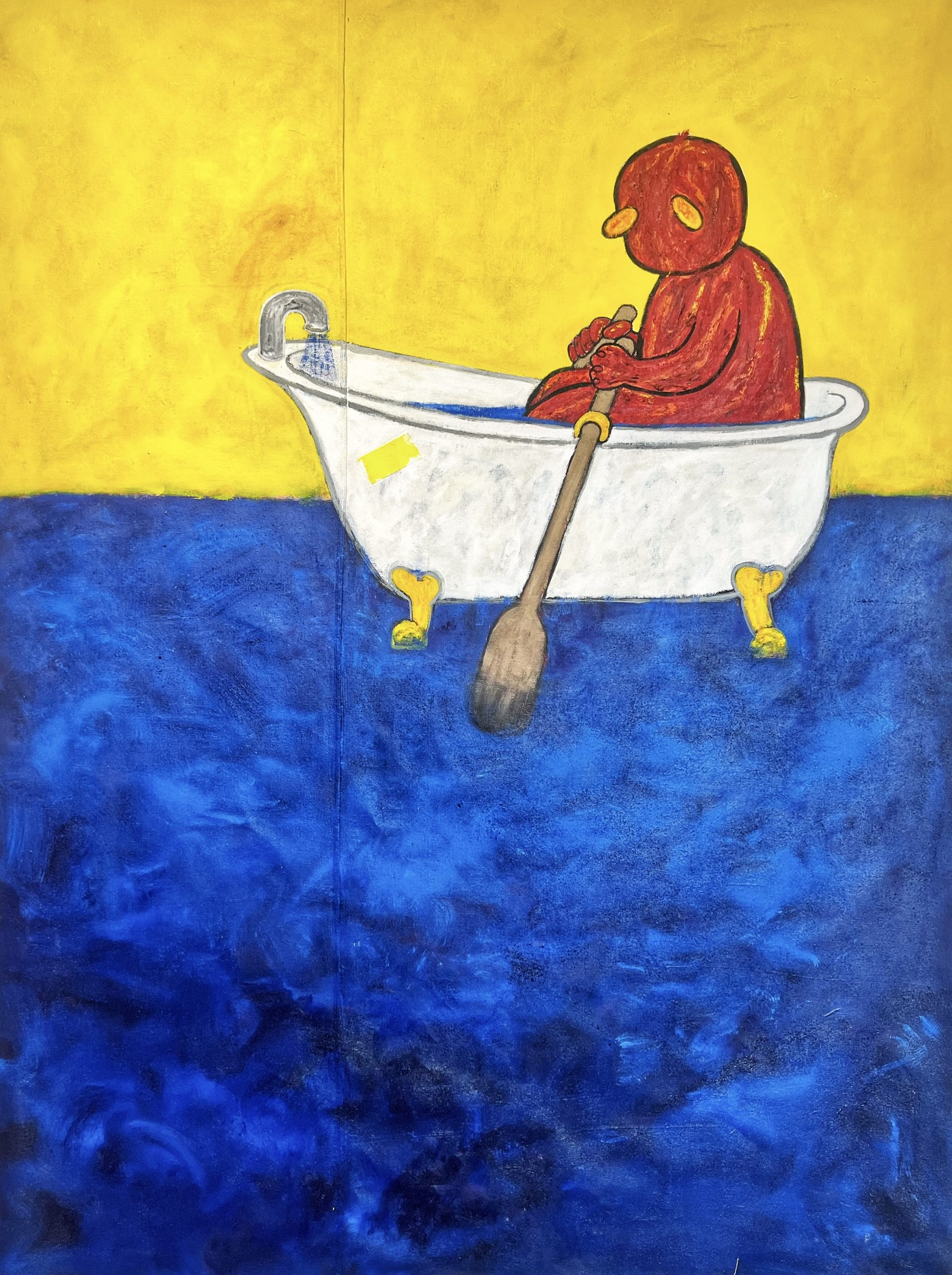
I’m interested in how we connect—with each other, with ourselves, and with the world around us. My work comes from a place of curiosity and reflection. I pull from literature, philosophy, psychology, and the visual noise of mass media and pop culture—not to make statements, but to ask questions. After years working in graphic design, I started to feel the need to make something more personal. Something slower, more human. That’s when I began building a multidisciplinary practice, letting painting, drawing, and visual language become ways to explore communication, empathy, and what it means to live with both joy and uncertainty. There’s often a mix of optimism and anxiety in my work. Power and vulnerability. Stillness and movement. I try to use as little as possible—just enough to hold a feeling or a thought. I’m drawn to simplicity not because it’s easy, but because it leaves space—for interpretation, for emotion, for breath. At the core of it all, I’m trying to create moments where people can pause. Even briefly. And maybe feel a little less alone.
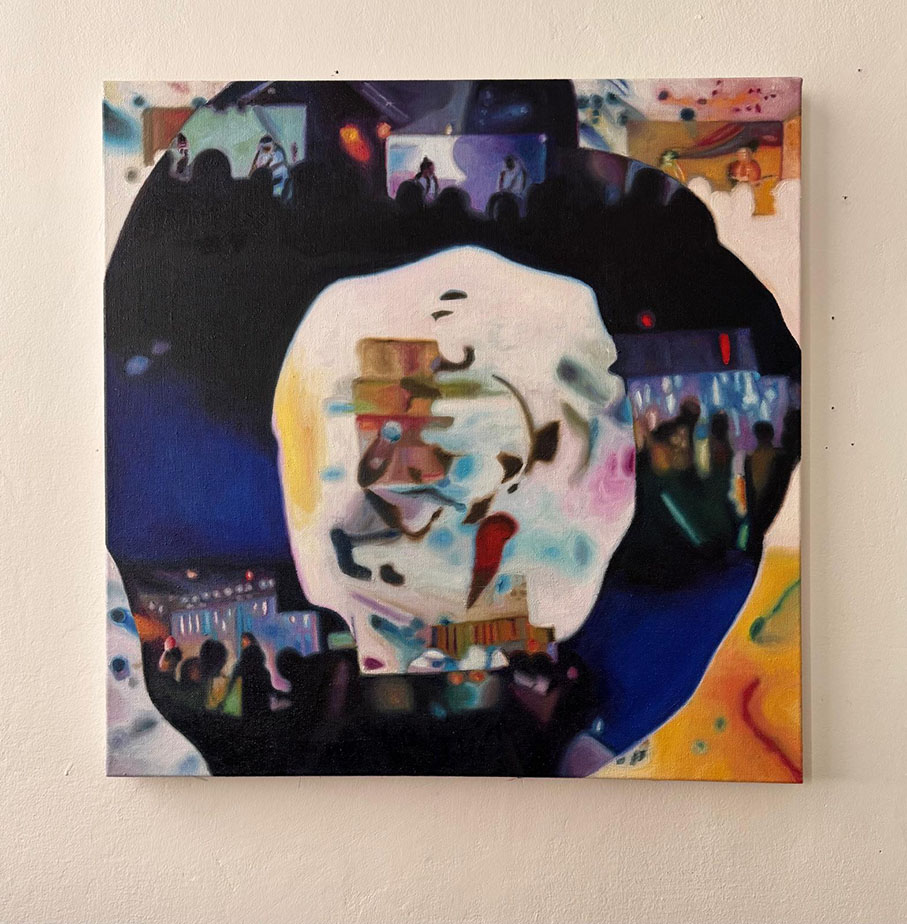
Daniel Schoch
Meine Bilder krachen zwischen Stuhl und Bank zwischen Abstraktion und Gegenständlichkeit. Das birgt eine gewisse gewisses Risiko. Mein momentanes Interesse an den Ikonen der Jetztzeit tut dies ebenso.
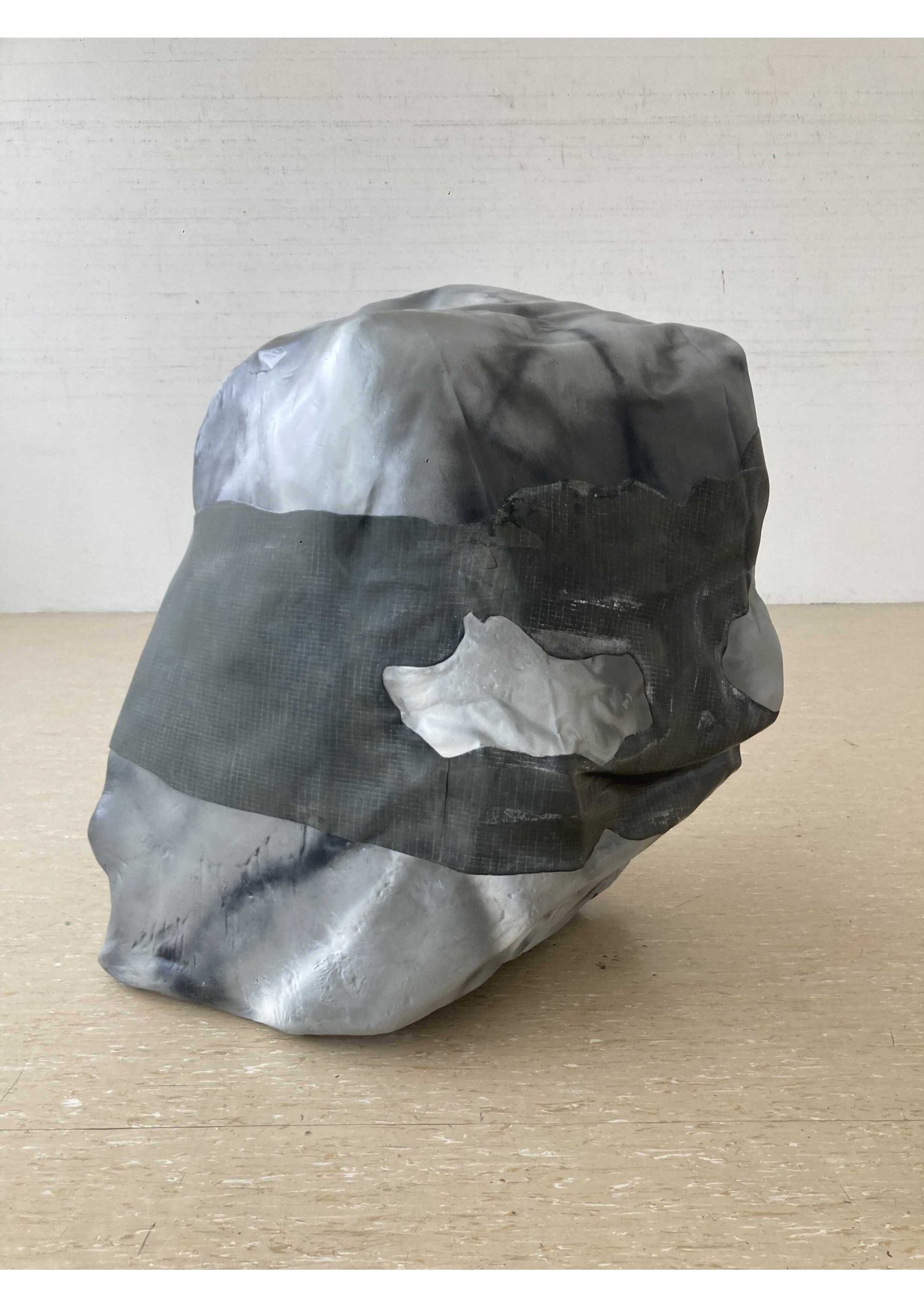
Christian Schoch
Ich untersuche die Beziehung von Farbe zu Form und einer konventionalisierten oder individuellen Konnotation unter Einbezug grösstmöglicher Freiheit in der Ausgestaltung meiner Arbeit. Dabei lässt sich deren Entwicklung in drei grössere Etappen gliedern. Den Ausbruch aus dem rechteckigen Bildformat, die Loslösung von der reinen Fläche hin zu Reliefs oder Objekten und schliesslich die Verwendung eines Vokabulars von Formen, welche aus der Bewegung beim Giessen entstehen. Dabei interessiert mich immer schon die Auslassung eines Hintergrunds. Da ich nicht figurativ arbeite, leite ich die Betrachter*Innen durch die Farbgebung und die räumliche Zusammenstellung der einzelnen Bildelemente in eine Situation, welche sie ermutigt, selbst eine Interpretation des Gesehenen zu bilden. Dabei ist mir die Essenz der Stimmung und der Atmosphäre wichtig, die eine Arbeit auslösen kann. Ich verwende daher immer stärker nicht eindeutig artikulierte Formen, welche mir die Möglichkeit geben, die Zuweisung des Erkennbaren in der Schwebe zu halten. Die Richtung der Entwicklung meiner Arbeit geht dabei in die „Schwerelosigkeit“ – als Zusammentreffen einzelner Bildelemente, die als Ganzes das assoziative Gedächtnis anregen. Die Ausgangslage für eine Arbeit formuliert sich dabei oft durch Gedankengänge, Wortbildungen oder Beschreibungen abstrakter Zusammenhänge – aber auch Bilder aus der Natur und dabei entstehende Konnotationen. ich will also nicht eine nachvollziehbare Geschichte erzählen oder illustrieren, sondern eine Stimmung und einen Anreiz für Gedankengänge erzeugen – dabei bemerke ich eine Nähe meiner Arbeiten zu Psychogrammen, denn da keine bestimmte Richtung für eine assoziative Rezeption beabsichtigt ist, verstärkt sich der Ausdruck meiner eigenen Vorstellungen.
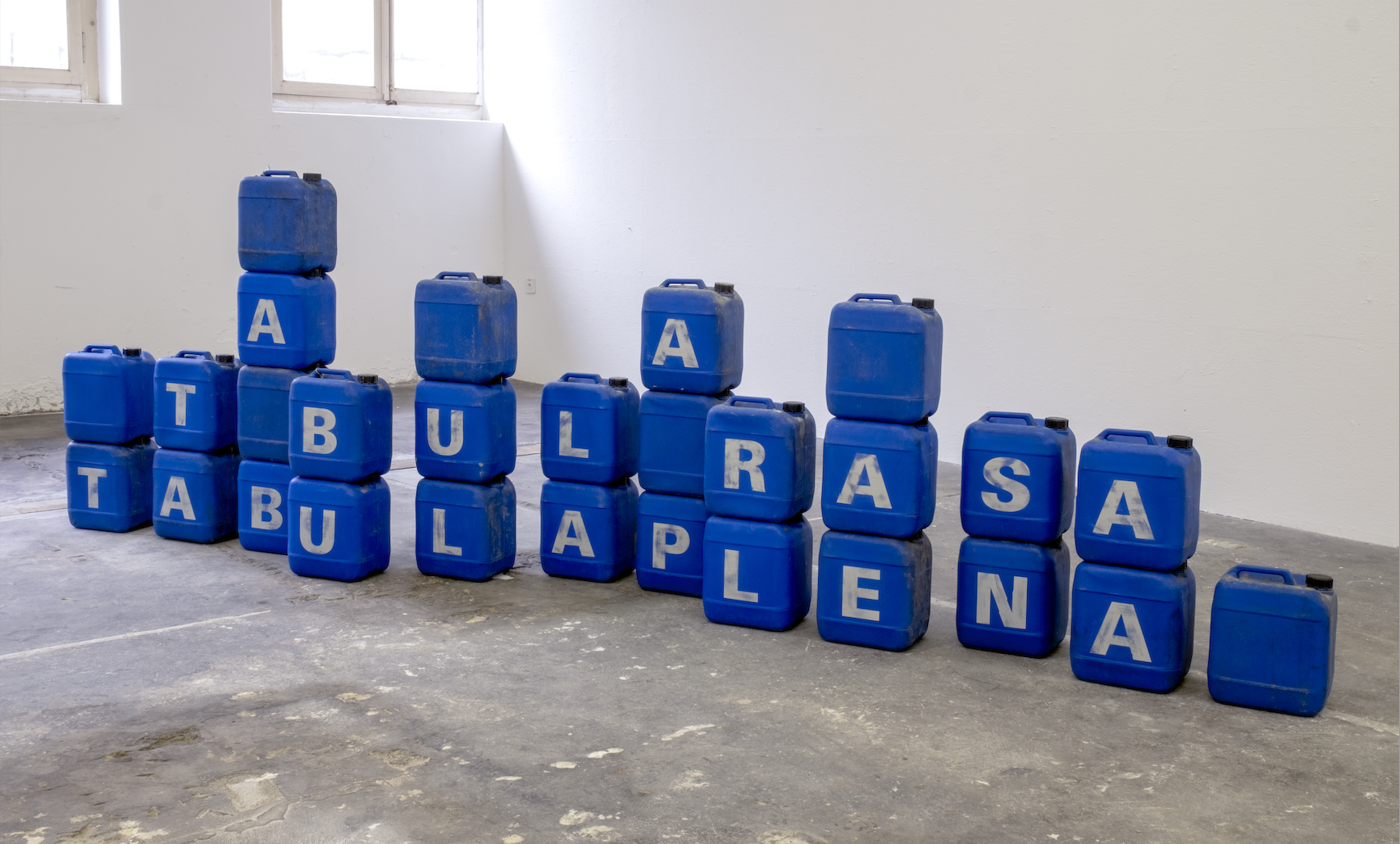
Annette Stöcker
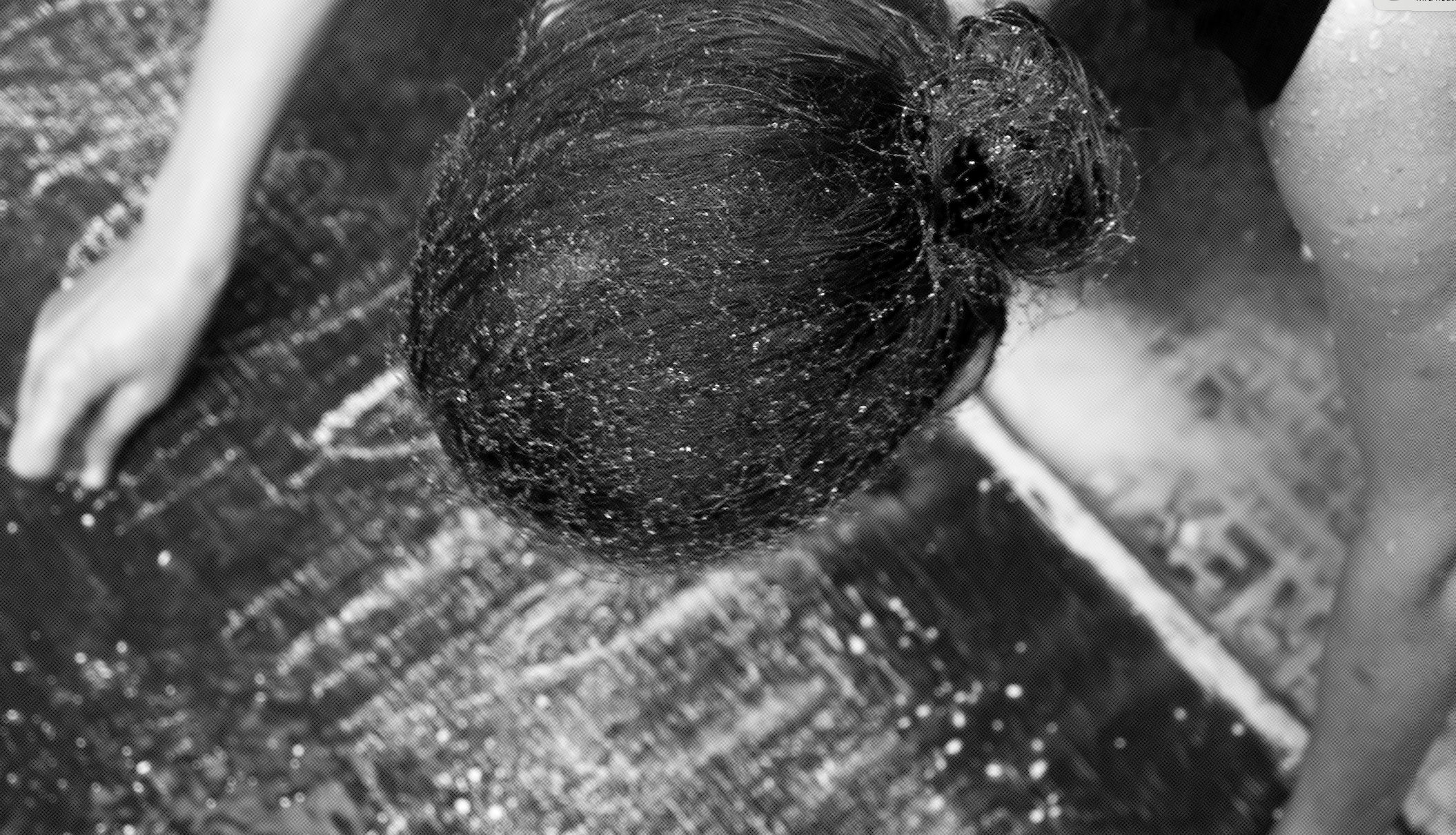
Christian Selig
Gerne
Susanne Schär
Der Fokus liegt auf der Betrachtung des Unspektakulären. – In den Arbeiten von Susanne Schär & Peter Spillmann geht die Wahrnehmung und Interpretation des Augenblicklichen voraus. Es ist die Hingabe an die kleinen, unscheinbaren Gegebenheiten, in denen sie das Besondere entdecken und für sich gewinnen. Meist sind es gerade die alltäglichen Wiederholungen, monotonen Rituale, die sie in Bann halten, und die sie zu mehrschichtigen Installationen mit unterschiedlichen Medien verarbeiten.
Peter Spillmann
Der Fokus liegt auf der Betrachtung des Unspektakulären. – In den Arbeiten von Susanne Schär & Peter Spillmann geht die Wahrnehmung und Interpretation des Augenblicklichen voraus. Es ist die Hingabe an die kleinen, unscheinbaren Gegebenheiten, in denen sie das Besondere entdecken und für sich gewinnen. Meist sind es gerade die alltäglichen Wiederholungen, monotonen Rituale, die sie in Bann halten, und die sie zu mehrschichtigen Installationen mit unterschiedlichen Medien verarbeiten.