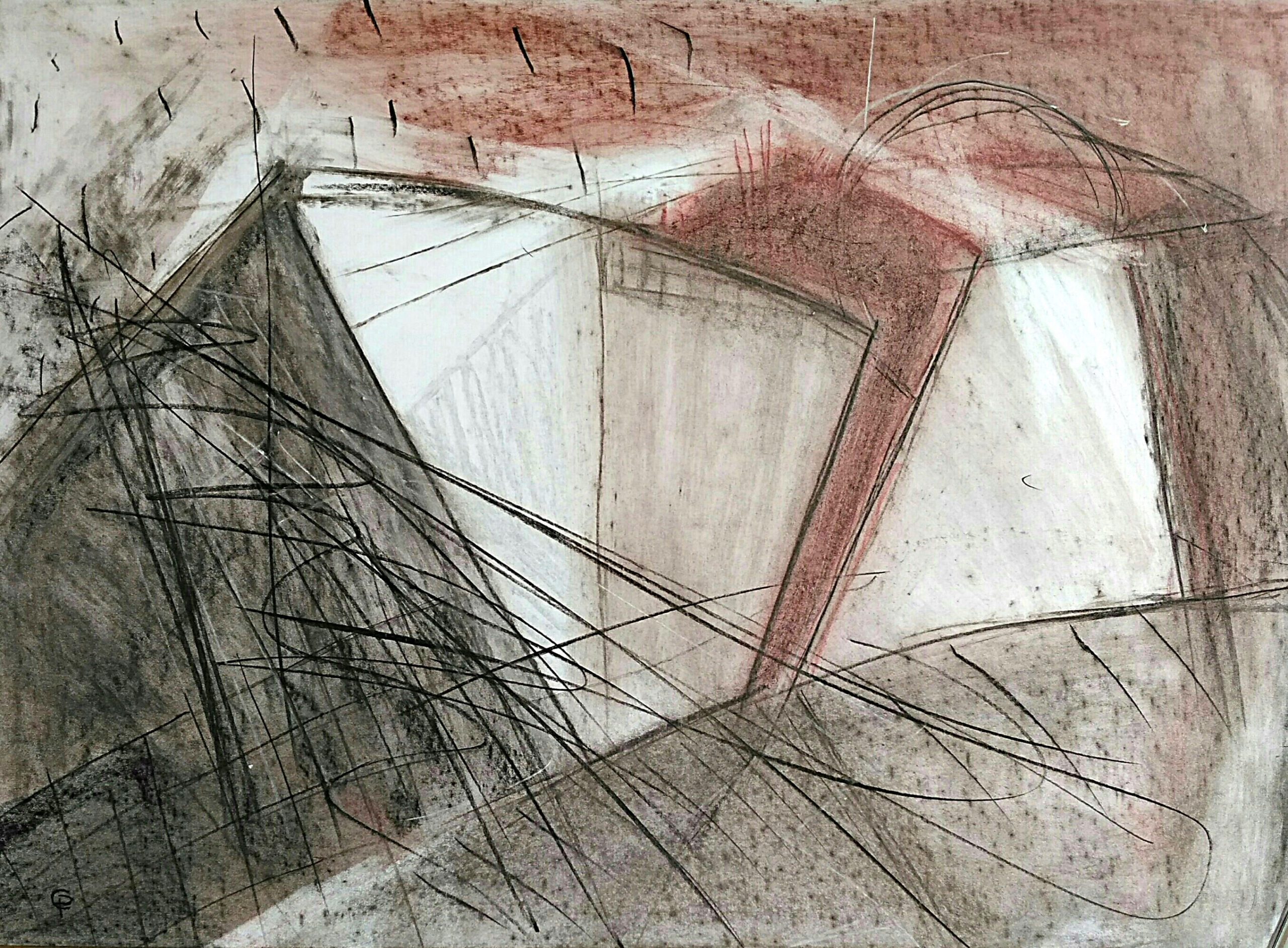
Dans ma démarche artistique, les thèmes retenus de mes œuvres apparaissent au fur et à mesure de mon actualité. Je dirais que les thèmes me trouvent. Pour peindre et dessiner, j’en extrais librement des ambiances ou des sujets. Certaines de mes œuvres s’inspirent de paysages naturels, jardins ou lieux urbains, de plans translucides, d’autres sont ancrées à des textes bibliques, poétiques ou philosophiques comme les villes invisibles, etc. Au départ il s’agit de libérer mon travail des contraintes iconiques. Des structures ou des architectures ou des paysages ne doivent pas concurrencer l’expression. Il me faut les déformer pour qu’elles deviennent des supports à la suggestion ou à des formes libres, structurées ou destructurées. Dans mes compositions en couleurs ou monochromes des figures apparaissant par les jeux entre le trait, l’effacement, le vide et la densité de matière. Selon le travail et l’inspiration, elles sont voulues comme des synthèses d’images ou des traces. Dessins ou peintures sur toile, ces œuvres comportent souvent des éléments eau et terre, air et feu. L’imitation du réel, toutefois sans la rejeter, reste secondaire. Par delà l’évocation, il y a la contemplation. Arrêtez la faute. Mettre du silence… Le sujet devient alors abstraction. Toute narration disparaît pour faire place aux signes et à la lumière.
Role : artiste
Emma Pidre
Claire Morgan
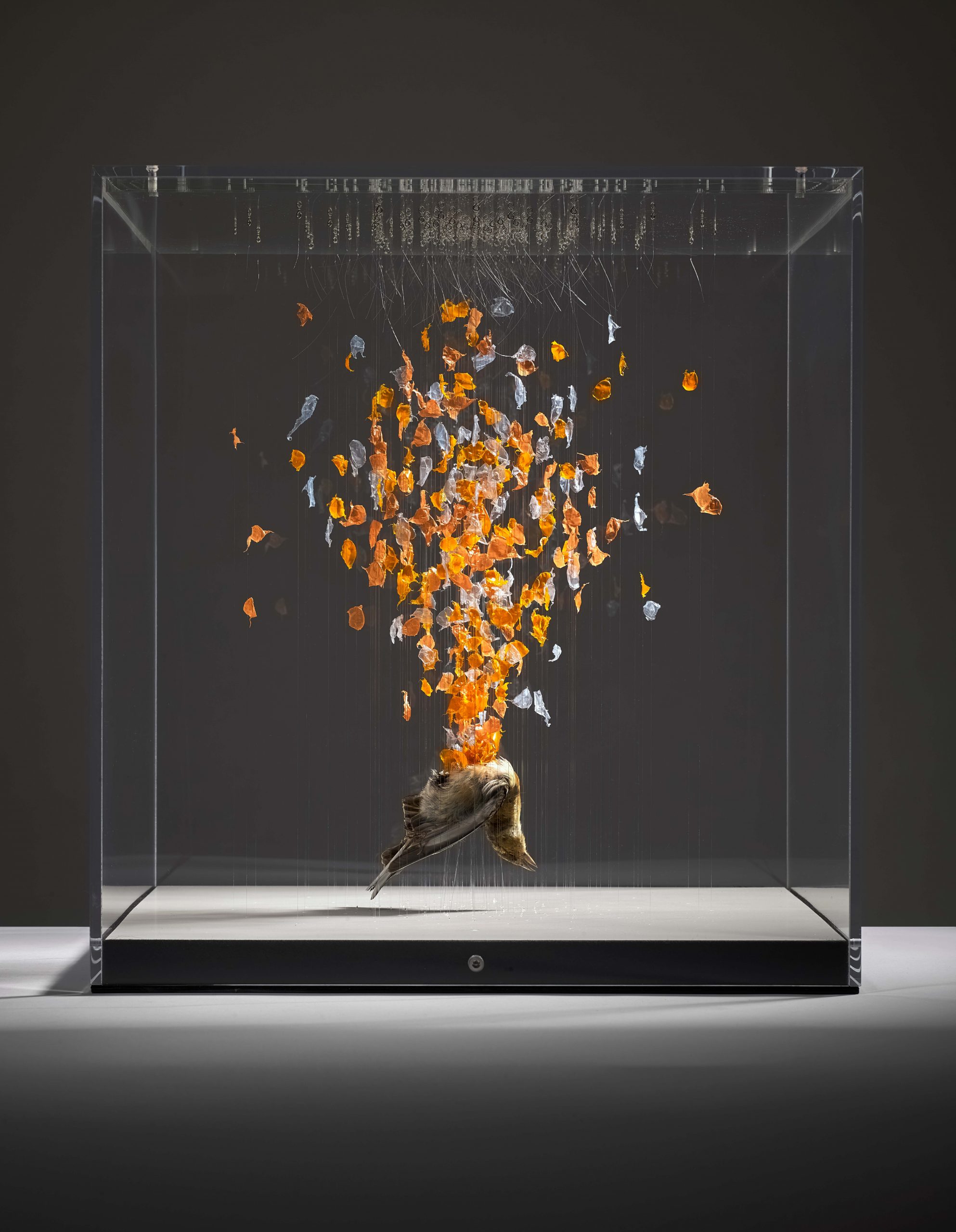
Humans are animals. Our intellectual dislocation from the landscape that sustains us is fuelled by the narratives we construct to distance ourselves from mortality and natural cycles. We behave as individual entities with fixed identities, but the reality is less clear. I am intrigued by those simultaneous senses of spiritual communion and unpalatable intrusion that come about through awareness of our connectedness, and of our vulnerability. My work explorations memory, grief and kinship, and the way that stories can shape identity. I use formal and material means to probe the inherent violence of the patriarchal, colonial systems that form so much of the basis of contemporary life. This has a cathartic function and slows that violence down, drawing from it a strange power and transformative potential. There is a desperate need to reimagine the relationships humans have with other species and with the planet. I want to delve into places where divisions blur between history and nature, the personal and the political. A boundary is not merely a dividing line, but a point where a transfer of energy might occur. The possibility of a spark.
Gabriele Horndasch
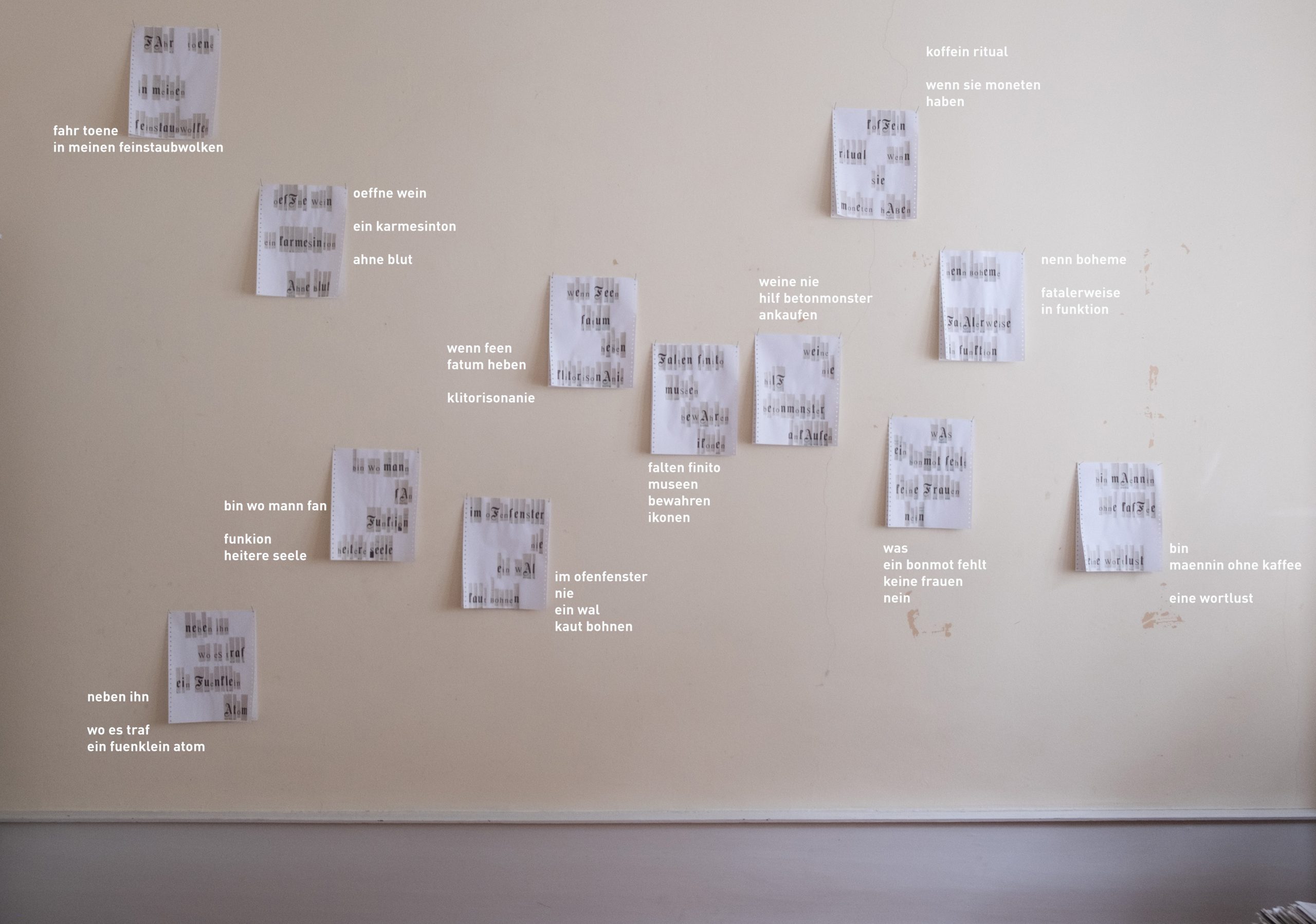
Auszug einer Rede von Tanja Kleine-Quadflieg über das künstlerische Werk von Gabriele Horndasch anläßlich der Verleihung der FBZ Art Award 2025 Gabriele Horndasch ist eine Künstlerin, die mit offenen Augen durch die Welt geht! Schon immer und immer mehr. Sie arbeitet interdisziplinär und hat sich zu keinem Genre festgelegt. Die Dinge begegnen ihr und sie greift sie auf. Ihre Fundstücke inspirieren sie und daraus entstehen vielschichtigste Arbeiten. Aber niemals beliebig! Sie entwickelt Visionen aus den Dingen, die ihr begegnen und dazu sucht sie sich ein bedeutungsvolles Umfeld, versucht des Pudels Kern zu finden. Dabei ziehen sich immer Rote Fäden durch alles. Ein wichtiger roter Faden in ihrem Werk ist die Sprache, der sprachwissenschaftliche Ansatz. Das erscheint immer wieder, auch wenn sie näht. Wie gerade aktuell bei den ‘Buchstabenkleidern’, […] die sie auch bei einer Ausstellung in Japan in diesem Jahr gezeigt hat. Kleider aus zartester asiatischer transparenter Seide benäht mit Anagrammen, Sammelstücke aus jahrelanger Spracharbeit. Sie zerschneidet jede FAZ akribisch und bildet aus den immer wiedererkennbar geschwungenen Buchstaben ihre Anagramme. Eine Sammlung ist dabei entstanden. […] mit ausgedienten Leuchtstoffschriftzügen schafft sie neue Sprachwände. Setzt sie in einen neuen Zusamenhang und damit sprechen sie ganz klar und deutlich zu uns. An Betonwänden erscheinen Sie, finden eine neue vorübergehende Heimat und Bedeutung. […] Tanja Kleine-Quadflieg Bochum, 26. Juni 2025
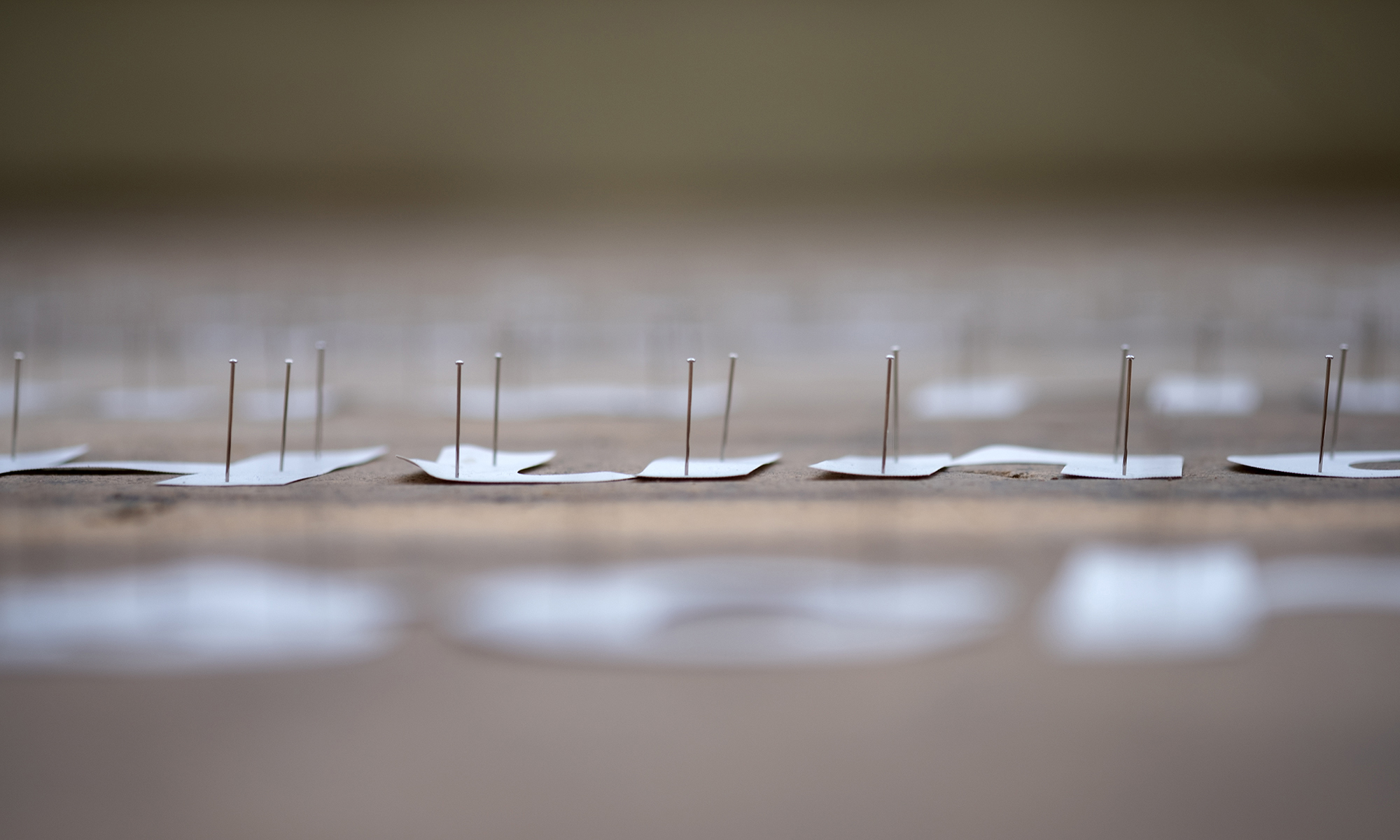
Axel Töpfer
Ich mache Filme ohne Bewegung. Filme, die sich nur mit der Imaginationsleistung der Betrachter:innen bewegen können. Ich suche und kombiniere. Gefundene, entwickelte, geliehene, imaginäre Bilder. Ich arbeite nicht linear mit den Methoden filmischer Montage. Für den Mind Movie ergeben sich damit kaum auszuschöpfende Möglichkeiten: Unendliche Dauern, un- mögliche Räume, Gleichzeitigkeiten von Gegensätzen. Storyboards, Partituren, Auslegeordnungen im Raum. Als textuelle Bilder, als Serien von Bildern, als räumlich erfahrbare Konstruktionen imaginativen Raums, als begehbares Filmset, als imaginäre Plas- tiken. Ich arbeite mit spezifischen, oft sehr seltenen Materialien, die einen Beitrag zum jeweiligen Film leisten: Staub aus den Händen verworfener Figuren, Granulat aus Weltraumschrott, in Flak-Scheinwerfern verendeten Insekten etc.. Ich entwickle Formate, Manifeste, Regelwerke als Teil meiner künstlerischen Praxis. Ich arbeite in verschiedenen Formationen, Kooperationen, Verschränkungen und setze verschiedene Möglichkeiten der Autorschaft vom Kollektiv bis in die Anonymität als Werkzeug meiner Arbeit ein.
Je réalise des films sans mouvement. Des films qui ne peuvent bouger que grâce à l’imagination des spectateurs. Je cherche et je combine. Des images trouvées, développées, empruntées, imaginaires. Je ne travaille pas de manière linéaire avec les méthodes du montage cinématographique. Pour le Mind Movie, cela ouvre des possibilités presque inépuisables : des durées infinies, des espaces impossibles, la coexistence d’opposés. Storyboards, partitions, mises en scène dans l’espace. Sous forme d’images textuelles, de séries d’images, de constructions d’un espace imaginaire perceptibles dans l’espace, de plateau de tournage accessible, de sculptures imaginaires. Je travaille avec des matériaux spécifiques, souvent très rares, qui apportent leur contribution au film concerné : de la poussière provenant des mains de personnages rejetés, des granulés issus de débris spatiaux, des insectes morts dans les projecteurs antiaériens, etc.. Dans le cadre de ma pratique artistique, je développe des formats, des manifestes et des ensembles de règles. Je travaille au sein de diverses formations, collaborations et imbrications, et j’utilise différentes formes d’auteur, allant du collectif à l’anonymat, comme outils de mon travail.
Michel Pfister
EINE KRAFTVOLLE UND RAUMGREIFENDE PRÄSENZ
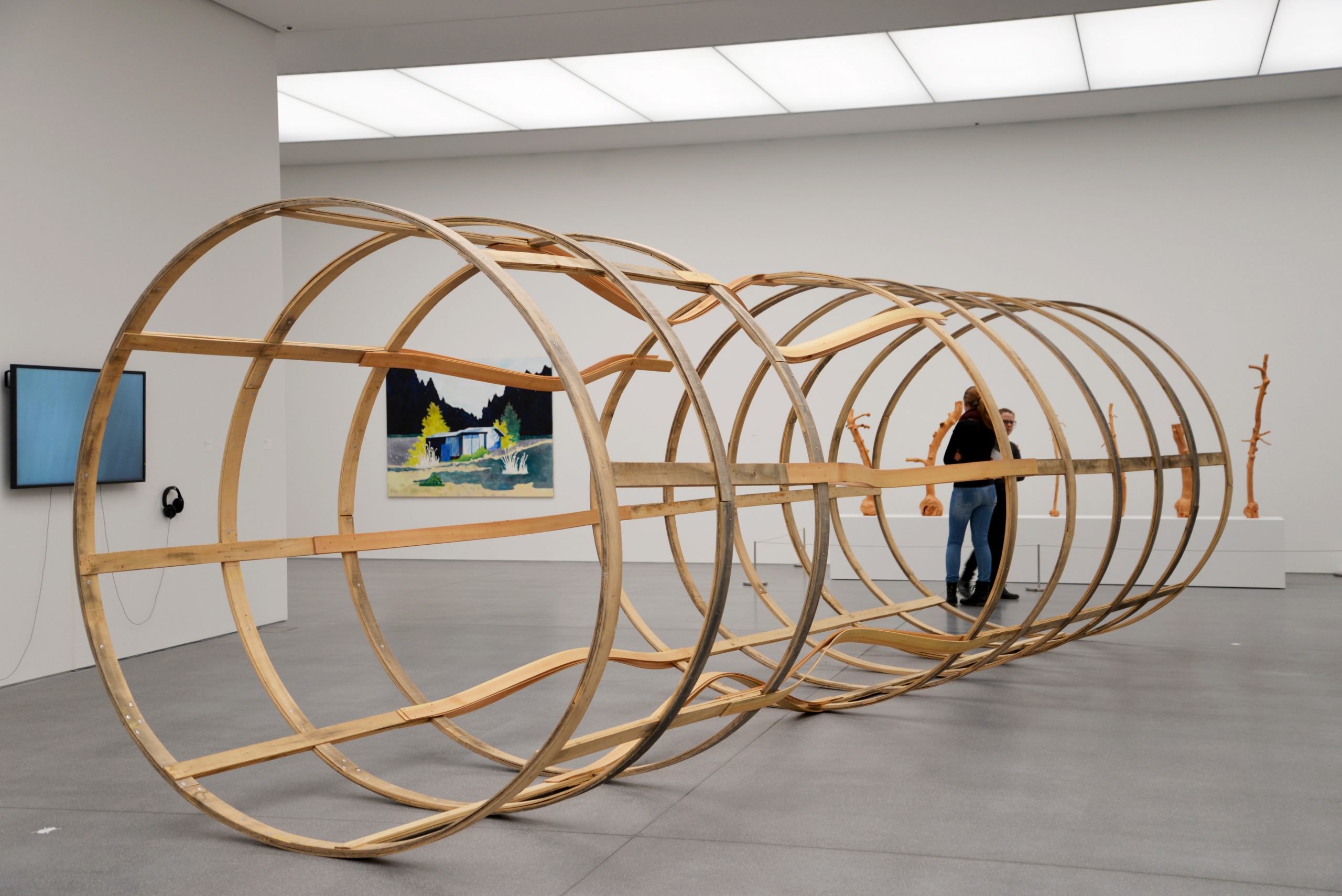
Ob klein- oder grossformatig, seinen raumgreifenden Interventionen gemein ist eine kraftvolle Präsenz, die Raum und Holzobjekt gleichermassen umschliesst. Die Rede ist von den Arbeiten von Michel Pfister, der — 1966 geboren und aufgewachsen in der Surselva — seit Jahrzehnten in Basel tätig ist.
BESCHAFFENHEIT DES MATERIALS
Sein Vater war der Schreiner in seinem Heimatdorf Waltensburg / Vuorz. Darauf führt Michel Pfister seine Leidenschaft für das Material Holz zurück, dessen Qualitäten weit über das rein Handwerkliche hinausgehen. In der unterschiedlichen Beschaffenheit sowie Oberflächenbehandlung, den haptischen, taktilen sowie olfaktorischen Eigenschaften des Materials,
die eine ungemeine Vielfalt an Verwendungsmöglichkeiten beherbergt und die laut Pfister noch lange nicht ausgereizt sind, hat der Künstler das ideale Medium für seinen persönlichen künstlerischen Ausdruck gefunden.
INTENTION UND ARBEITSWEISE
Michel Pfisters künstlerische Intention liegt in der intensiven Auseinandersetzung mit Raum, Objekt und Architektur. Dabei ist ihm das handwerkliche Können genauso wichtig wie der Umgang mit dem Material. Seine Interventionen sind jeweils ortsbezogen. Indem sich Pfister in einem ersten Schritt auf die vorgefundene räumliche Gegebenheit einlässt, ist es ihm möglich,
den Raum — durchaus auch intuitiv — zu erfassen. Der nächste Arbeitsschritt spielt sich im Atelier ab: Es entstehen skizzenhafte Zeichnungen von Hand. Diese Entwürfe widerspiegeln einerseits seinen Eindruck des zu bespielenden Ortes, andererseits stellen sie eine erste Idee des künstlerischen Eingriffes dar. Wieder vor Ort erfolgt die Kontrolle, ob Form, Grösse und Proportion den Räumlichkeiten tatsächlich entsprechen. Pfisters akribische Arbeitsweise
erfordert Zeit und Geduld. Während einer nächsten Phase, die den Aufbau der Installation beinhaltet, eröffnet sich ihm nach und nach ein Zeitfenster, in dem er spürt, dass Raum und Objekt eine gemeinsame Geschichte zu erzählen beginnen. Nun lässt er sich abermals Zeit, besucht die Räume wieder und wieder und nimmt geringfügige Änderungen vor. Irgendwann tritt schliesslich der Moment ein, an dem sich dem Künstler die erhoffte Intention offenbart: eine gegenseitige Durchdringung von geschaffenem Objekt sowie vorgegebener Raumsituation.
Dabei verfolgt er in seinem Kunstschaffen stets das Ziel, mit minimalen Eingriffen eine grösstmögliche Wirkung zu realisieren.
Eine Stärke der Arbeiten von Pfister besteht darin, dass ihre ausstrahlende — buchstäblich fühlbare — Präsenz die vorgefundene Raumsituation zu intensivieren vermag. Die innewohnende Kraft der Objekte schafft im Zusammenspiel mit den Räumlichkeiten eine spannungsvolle Atmosphäre. Durch Michel Pfisters Eingriffe wird die Geschichte des Ortes quasi konserviert und auf einer nonverbalen, sinnlichen Ebene weitergeführt.
Ginia Holdener
Sonja Maria Schobinger
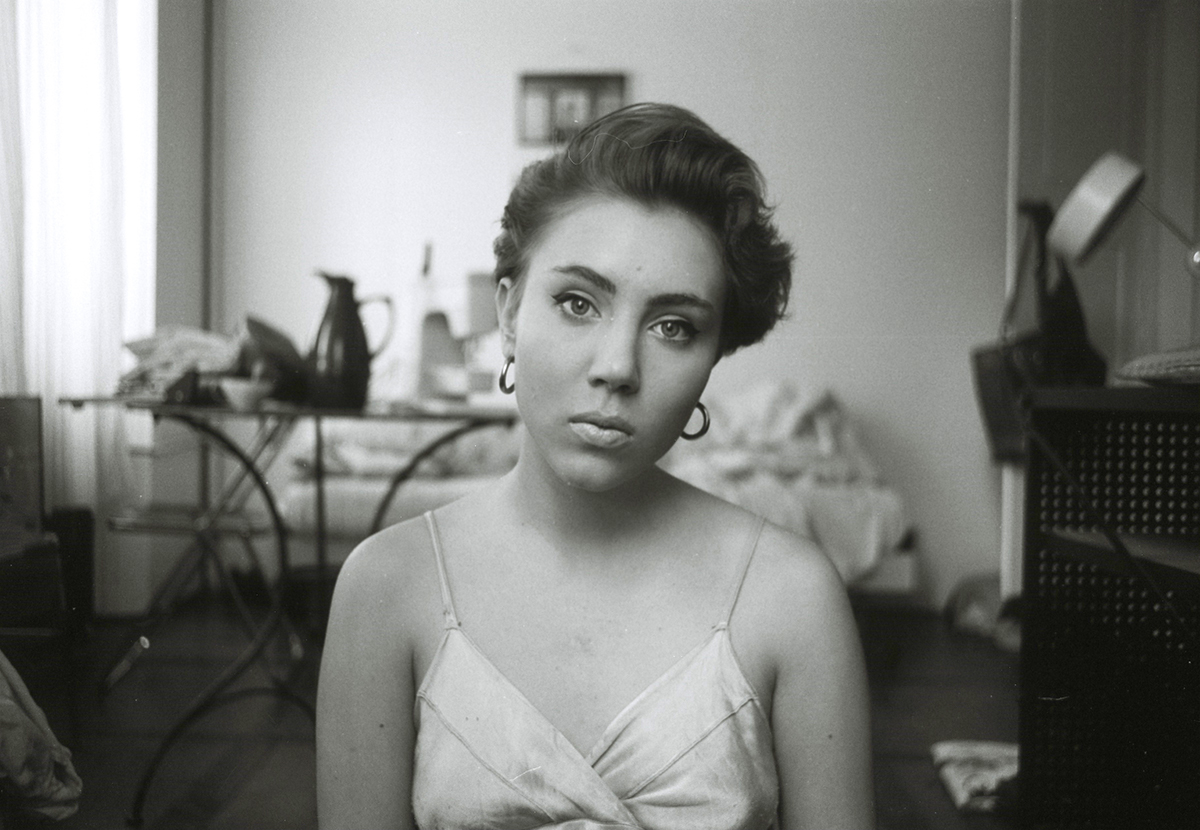
» At the beginning stands the search of a young woman for her own space in this world. The black-and-white photographs powerfully convey her critical and searching gaze—on herself as a young woman, on her personality, and on her first home, both inside and out. It becomes clear that from the very beginning of her artistic journey in the mid-1980s, Sonja Maria Schobinger has been a photographer. In the darkroom, she first explored the possibilities of analog photography through silver gelatin prints with curiosity and experimentation. Later in her artistic search, she delved into the world of digital photography, only to return again and again to traditional artistic techniques, such as drawing—though practiced using the tools of a computer screen. The camera is a significant technical instrument to tentatively explore the world and the self. Yet it is not the technical aspect of photography that interests her (today). Her quest is for the substance beyond matter; she illuminates fleeting moments with great nuance and captures their transience in her images. Sonja Maria Schobinger’s long-term (research) projects have evolved over decades into thematic groups: early self-portraits in Coming of Age, Anthemis Nobilis, Still Lifes, Flowers, and Trees. In the long-term project Anthemis Nobilis, we see a female body—the artist’s own—surrounded and protected by plants.The female body is more sensed than seen—its contours wrapped in various plants: mistletoe, blackberries, strawberries, violets, and delicate branches from different trees. The artist searches in her compositions for the essence of each plant and its harmonious counterpart. The result is a series of fragile image-layerings that challenge the viewer’s eye without distorting perspective. These layers generate a certain visual tension. At the same time, by combining historical botanical photography with analog images from Coming of Ageusing digital techniques, the work expresses different layers of time: past and present, the capturing of a moment and the documentation of change over time. The plants, with their unique and specific qualities, provide a protective covering for the vulnerable body—offering both protection and healing. At the same time, they embed the human organism into the forces of nature and the cycle of life. In the moment a petal is backlit, or the shimmering canopy of a tree becomes translucent, light—the immaterial—becomes visible. And here we again encounter the photographer behind the lens, who sensitively and precisely illuminates the magic of the moment and explores the mysteries of being. » Text excerpt written by Dr. Astrid Bextermöller, art historian, Basel
Raphael Reichert
Reichert’s works originate from collected documentations of his immediate surroundings, primarily using digital means as a point of departure. These resulting set pieces are then softly reworked and placed within a broader social context. Immediacy and density are recurring strategies across his chosen media—whether in painting, video, or photography. He is less concerned with technical perfection and more focused on communicating the directness of his thoughts and concepts. His ideas emerge through the compression of vast collections into concentrated, layered forms. His videographic works often reference pop-cultural phenomena such as fitness challenges, travel vlogs, Instagram stories and other online trends, while also experimenting with documentary stylistic devices like talking heads, subtitles, and voice-over narration. Reichert’s work has been exhibited mainly nationally but has also been shown internationally in screenings and group shows, including shows at Kunsthaus Glarus and Kunst(zeug)haus (Rapperswil, CH) in 2021 and a duo show with Ivana Kvesić at Ausstellungsraum Klingental in 2020. In 2022, Reichert presented his first solo show with contributions by Leah Studinger, titled „Opt-in“ at Architektur Forum Ostschweiz (St.Gallen, CH), followed by a duo show with Leah Studinger at Hiltibold (St.Gallen, CH) and a solo show at Peripherie8 (Basel, CH) in 2023. He has received a work grant from the city of St.Gallen in 2020. In 2025, he presented a larger body of work in a duo show with Katherine Newton at Le ventre (Hégenheim, FR), curated by Maria Claudia Gamboa. In 2026, Reichert will show his work in solo shows at Espace Formaline, Suhr, CH and at the Rhyality Immersive Art Hall in Neuhausen, CH as well as in two simultaneous solo presentations of his extensive video work reading the news, organized by Videokunst.ch at Videofenster Bienzgut, Bern, CH and Videofenster Houdini, Zürich, CH.
Juliette Lepage Boisdron
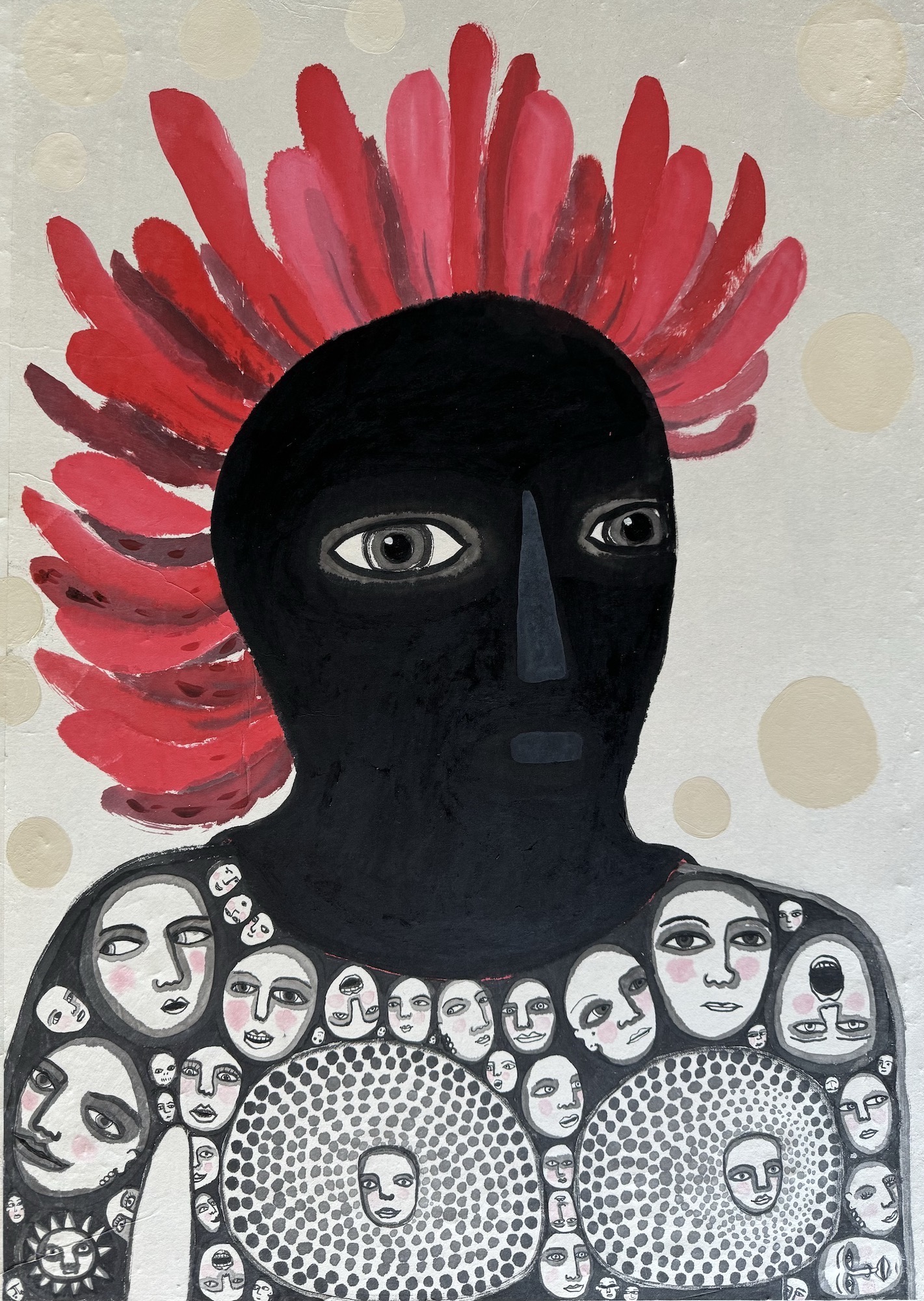
Mon travail parle surtout de la place des femmes dans la société, et plus particulièrement celle des mères. A la fois puissantes, créatrices, elles sont aussi souvent effacées et vulnérables. À travers mes dessins je cherche à représenter un espace intime et universel, fait de transmissions, souvent silencieuses, parfois lourdes, qui façonnent nos vies dès notre naissance. La nature est aussi au cœur de mon travail. Plantes, insectes, cactus, bien sûr ils évoquent notre rapport á notre environnement, mais je les vois aussi comme des symboles : ils évoquent à la fois la force et la fragilité, ils rappellent les cycles de la vie, ce qui grandit, résiste, change ou disparaît, à l’image des liens invisibles qui traversent les générations. Mon geste est instinctif, parfois répétitif. Je dessine directement à l’encre, sans croquis préalable, surtout sur le papier de riz, où la moindre hésitation laisse sa trace. Les formes restent souvent incomplètes, déséquilibrées, flottantes. J’aime cette imperfection : elle révèle ce que l’œil ne voit pas, les forces discrètes, les fragilités, les présences invisibles qui habitent le monde.
Veronika Geiger
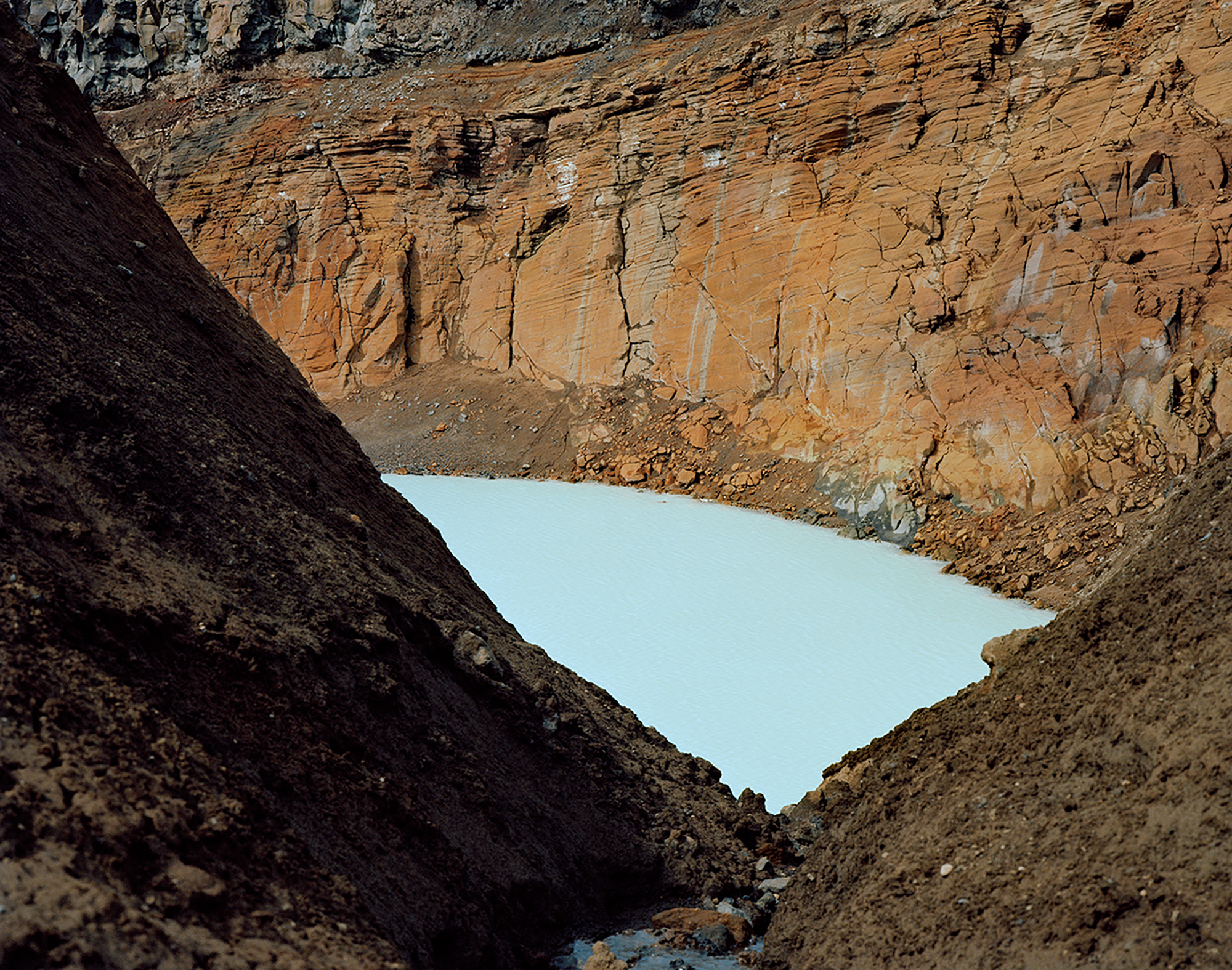
Photography became part of my life at the age of 17, when I got an analogue camera from my Swiss grandfather. Since then, I’ve continued to build a relationship with photography in various ways. My experience with photography is shaped most strongly by my educational background in Fine Art Photography from Glasgow School of Art and continued to be my focus during my MA in Fine Art at Iceland University of the Arts. My own personal need for connecting with nature led me to travel with my camera extensively in remote landscapes. Nature being the fundamental premise for our life and at this point in time undergoing huge environmental changes, I became engaged in field work with scientists. All these new perspectives on nature, motivated me to search for a new visual language in landscape photography, which I am still working on. For me photography has become an extension of how I am in the world. I can think and breathe through photography. In many ways my experience with photography is similar to my experience of writing. Whether a visual or verbal starting point: an impression, a sentence, a chance encounter, a walk by the river.